


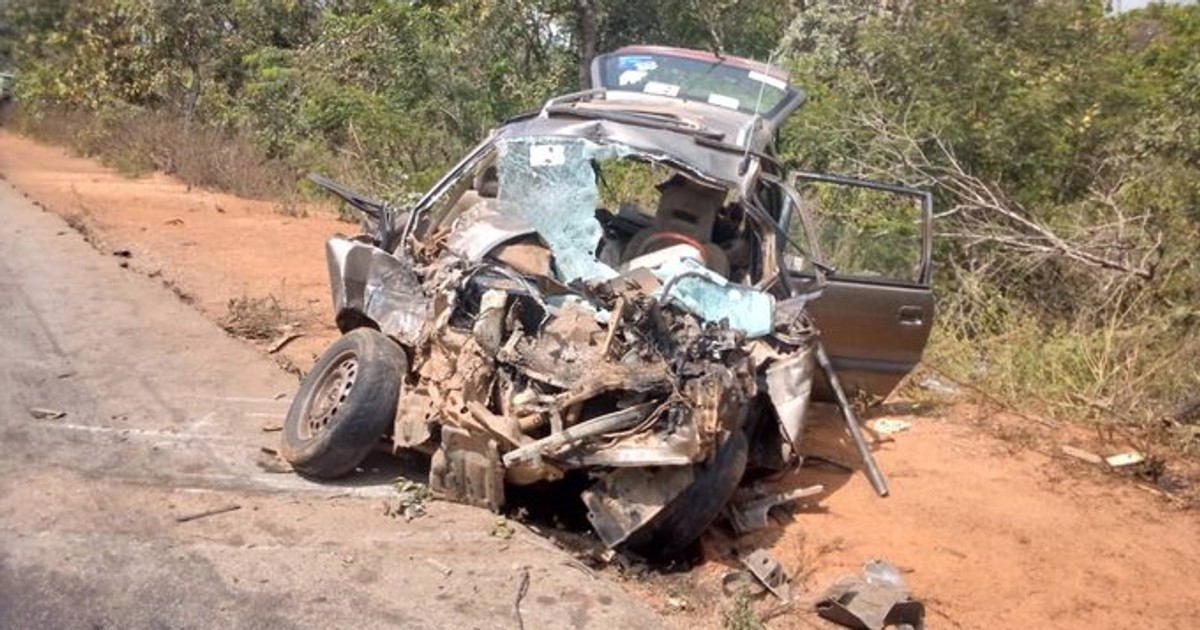
“Every crash is not just a number—it’s a family shattered, a future lost, a wound in the nation’s heart.”
Over the last five years, Ghana has faced an ongoing public safety crisis road traffic accidents. Despite efforts from the Motor Traffic and Transport Department (MTTD), the National Road Safety Authority (NRSA), and other stakeholders, thousands of Ghanaians continue to die or suffer serious injuries every year on the country’s roads. Between 2020 and mid-2025, more than 13,000 lives were lost in road accidents, with many more people injured, permanently disabled, or psychologically scarred.
This article takes a deep look into the patterns of road accidents in Ghana over this period, the underlying causes, the regional disparities in crash data, and the measures that can and should be implemented by various stakeholders drivers, pedestrians, government agencies, and institutions to curb the trend. The goal is to explain not only what is happening but why it continues, and what can be done to stop it.
A Snapshot of the Numbers (2020–2025)
According to data from the MTTD and NRSA, Ghana recorded consistently high rates of road accidents from 2020 through the first quarter of 2025. In 2020, the country saw an estimated 12,484 crashes, with around 2,528 deaths and more than 14,000 injuries (Ghana News Agency, 2024). That number rose dramatically in 2021, with 15,972 reported crashes and approximately 2,924 lives lost marking the deadliest year in recent memory.
By 2022, there was a slight decline, with roughly 14,960 crashes and 2,373 deaths. Injuries that year were slightly above 15,690, and pedestrian knockdowns were alarmingly high at 2,680 cases. The trend of marginal decline continued in 2023, with 14,135 reported crashes, 2,276 deaths, and 15,409 injuries (MyJoyOnline, 2024).
Unfortunately, the gains made in 2023 did not hold. In 2024, road fatalities surged again. Between January and October, there were roughly 13,489 crashes involving 18,876 vehicles, leading to an estimated 2,494 deaths and nearly 13,000 injuries. The first quarter of 2025 didn’t bring any relief either. From January to March, Ghana recorded 3,674 crashes, involving 6,143 vehicles, resulting in 752 deaths and over 4,200 injuries (NRSA, 2025).
These numbers tell a story of a country grappling with a persistent problem one that touches every part of the nation, from the capital city to the smallest rural communities.
A Tale of Uneven Impacts
The impact of road accidents is not evenly spread across Ghana. Some regions bear a heavier burden than others. Greater Accra, as the most urbanized region, consistently records the highest number of crashes. In 2024 alone, over 3,390 crashes were reported in the region by October. However, in a surprising twist, Greater Accra did not have the highest number of fatalities, possibly due to faster emergency response or better hospital access.
Ashanti Region, particularly Kumasi and its environs, recorded a significant rise in fatalities in 2024. In the first half of the year, road deaths in Ashanti increased by 67.5% compared to the same period in 2023 (Ghana News Agency, 2024). The region accounted for 1,375 crashes, 325 deaths, and nearly 1,500 injuries in just six months.
The Central Region saw a more mixed trend. Crashes declined slightly in 2023 and early 2024, but pedestrian knockdowns rose significantly by the end of 2024. Speeding was responsible for about 60% of all crashes in the region (Ghana Business News, 2024).
Western Region reported 706 crashes in 2023 with 120 fatalities. In 2024, fatalities spiked by over 55%, reaching 187 deaths even as injuries decreased. This contrast suggests a shift toward more lethal collisions, possibly due to increased speeding or head-on crashes.
Volta Region also experienced rising crashes in 2024, jumping from 427 in 2023 to 525. However, the region saw a 30% decline in fatalities during the same period. That trend reversed in early 2025 when Q1 saw a sharp rise in both fatalities and injuries, with motorcycles accounting for nearly half the vehicles involved.
“Speeding, overloading, poor lighting, and weak enforcement don’t just add up—they multiply danger.”
What’s Causing the Accidents?
The root causes of Ghana’s road accidents are widely known and repeatedly documented. The most consistent culprit is human error, especially speeding. Drivers frequently exceed speed limits, particularly on highways like the Accra-Kumasi and Accra-Cape Coast roads. Overconfidence, distraction, and fatigue also play major roles. Drivers work long hours without rest, leading to slower reaction times and poor judgment on the road.
Another major issue is wrongful overtaking. Many head-on collisions some of the deadliest types of accidents occur when drivers try to overtake on narrow, curved, or hilly roads without clear visibility. Add to that overloading of vehicles, particularly passenger minibuses (trotros) and commercial trucks, and the problem worsens. Overloaded vehicles are harder to control and take longer to stop.
Poor vehicle maintenance also features prominently. Many commercial vehicles run on worn-out tires, have faulty brake systems, or operate without proper lighting at night. In rural areas, unroadworthy vehicles are common, yet they continue to operate unchecked.
Beyond driver behavior, infrastructure deficits contribute heavily. Many roads in Ghana lack clear signage, speed ramps, or pedestrian walkways. In several towns and peri-urban areas, street lighting is poor or non-existent, increasing the risk of night-time crashes.
Enforcement challenges also weaken deterrents. Although MTTD is tasked with enforcing traffic laws, the unit suffers from limited resources, manpower shortages, and sometimes weak internal accountability. Speed limit enforcement remains minimal outside a few urban areas.
Lastly, pedestrian behaviorplays a role. Jaywalking, ignoring pedestrian crossings, and poor visibility at night are all major contributors to knockdowns, which account for a significant portion of deaths every year. Children walking to school, elderly persons crossing highways, and vendors moving across busy roads are particularly vulnerable.
What Can Be Done?
From the Driver’s Seat
Drivers are the first line of defense. Safe driving must become the default, not the exception. That begins with strict adherence to speed limits, avoiding overtaking unless absolutely safe, and pulling over to rest when fatigued. Commercial drivers must resist pressure to overwork, even when passengers or employers demand unrealistic turnaround times.
There also needs to be a stronger culture of vehicle maintenance. Drivers should take responsibility for ensuring their cars are roadworthy not just when going for DVLA inspection, but as a regular habit. Brakes, tires, lights, and steering systems must be checked and maintained diligently.
From the Pedestrian’s Perspective
Pedestrians must also be more aware of their surroundings. Using designated crossings, avoiding distractions like phones while walking near busy roads, and wearing visible clothing at night can drastically reduce pedestrian-related accidents.
Children must be taught road safety rules early. School programs, community outreach, and even road safety cartoons or radio dramas could help teach children and caregivers to be safer on the streets.
From the Government’s Side
Government agencies need to move beyond public awareness campaigns and into systemic reform. Road design must prioritize safety more speed ramps, zebra crossings, sidewalks, and better signage are needed. Lighting should be installed on all major roads and intersections, especially in high-pedestrian areas.
Speed enforcement cameras already being tested in parts of the country must be scaled nationally. This removes the possibility of police bias or bribery and ensures that drivers know speeding carries real consequences. Fines from traffic violations can be reinvested into road infrastructure.
The MTTD needs reform and resources. Calls for its restructuring have grown louder in recent years (Ghana News Agency, 2025). More officers, better training, and modern tools such as drones, dashcams, and GPS trackers can strengthen enforcement.
The DVLA must be stricter with licensing. Road tests should be comprehensive, and refresher courses could be mandated every few years. Drivers with multiple offenses should face real consequences, including license suspension.
From Institutions and CSOs
Civil society organizations, NGOs, and religious groups can amplify road safety messaging and support victims of crashes. Trauma recovery, counseling, and legal aid for affected families could soften the long-term social costs of accidents. The private sector especially transport companies must invest in driver safety, training, and vehicle maintenance.
A National Wake-Up Call
The consistent levels of fatalities in Ghana’s road crash data from 2020 to 2025 paint a grim picture. Even as the total number of crashes fluctuates, deaths continue to climb in some years, and the burden on hospitals, families, and the economy grows heavier.
The cost of inaction is not just measured in statistics. Each number represents a life lost a breadwinner, a child, a friend. The ripple effects go beyond the immediate victims, affecting households, communities, and national productivity.
There is no single fix. But if drivers become more responsible, pedestrians more cautious, institutions more rigorous, and the government more committed to safety-focused infrastructure, enforcement, and accountability, Ghana can begin to reverse this deadly trend.
The time for change is now.
Sources:
- Ghana News Agency: https://gna.org.gh
- National Road Safety Authority: https://nrsa.gov.gh
- MyJoyOnline: https://www.myjoyonline.com
- CitiNewsroom: https://citinewsroom.com
- Asaase Radio: https://asaaseradio.com
- Ghana Business News: https://www.ghanabusinessnews.com
- GBC Ghana Online: https://www.gbcghanaonline.com